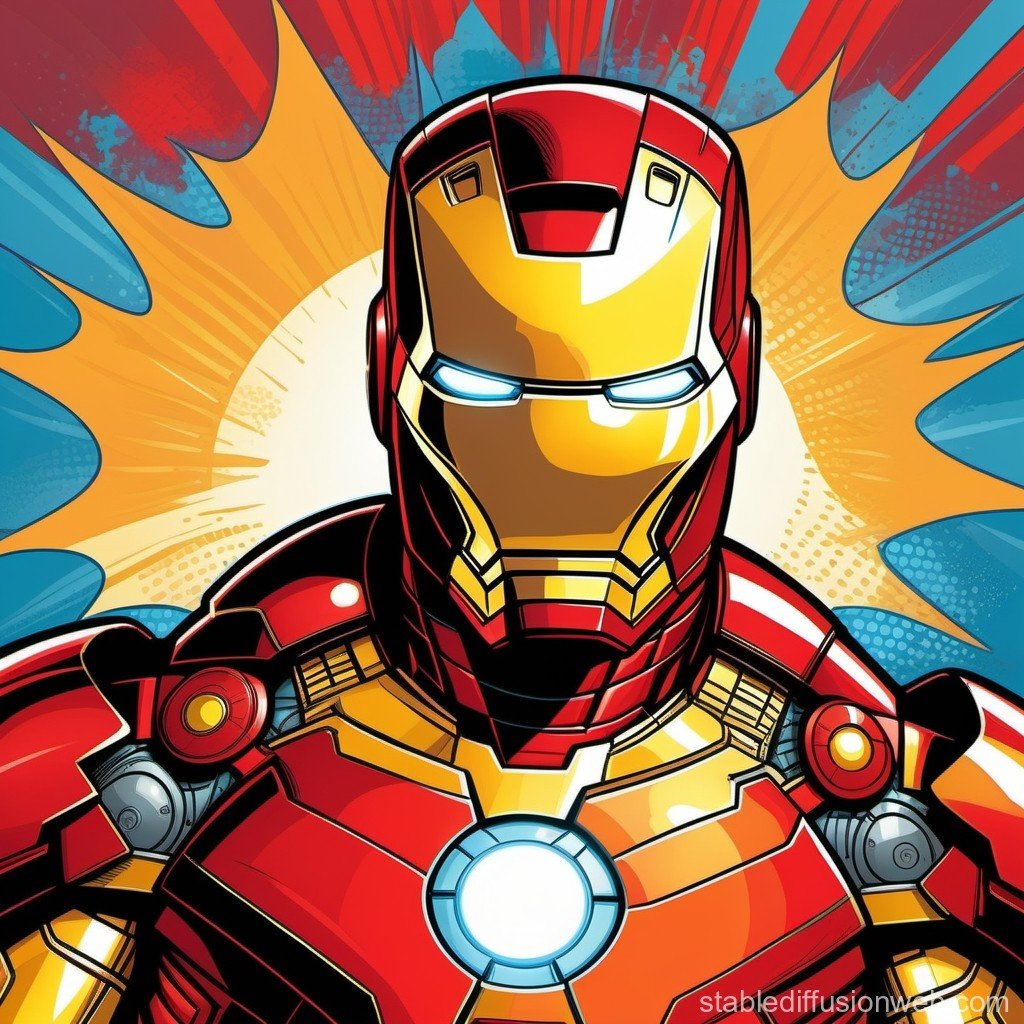
From his explosive debut in comic panels to anchoring a cinematic universe and inspiring theme park attractions, Iron Man isn't just a superhero—he's a cultural titan. His journey epitomizes how a character can transcend their original medium, shaping Iron Man in Pop Culture: Movies, Comics & Beyond across every conceivable platform. What started as a clever concept in 1963 has evolved into a global phenomenon, constantly redefining what's possible for character-driven narratives in mass media.
He's a master inventor, a sharp-witted billionaire, and often, the flawed hero who carries the heaviest burdens. But beyond the armor, Tony Stark's story is a compelling blueprint for how a character can capture the collective imagination and become a foundational pillar of modern entertainment.
At a Glance: The Enduring Impact of Iron Man
- Origin Story: Debuted in Tales of Suspense #39 (1963) as Anthony Edward Stark, a brilliant but arrogant inventor forced to build his iconic suit for survival.
- Comic Book Evolution: Quickly gained popularity, leading to dedicated comic book space and eventually his own solo title by 1968, with multiple volumes continuing to 2018.
- Early Multimedia Prowess: Starred in The Marvel Super Heroes (1966), introducing his famous theme song, and was an early video game pioneer with Captain America and The Avengers (1991).
- MCU Game Changer: Robert Downey Jr.'s portrayal in the 2008 Iron Man film launched the Marvel Cinematic Universe, achieving massive box office success and fundamentally altering Hollywood's superhero landscape.
- Central to the Avengers: A founding member and pivotal figure in major MCU crossover films like The Avengers and Avengers: Endgame, solidifying his iconic status.
- Beyond Screens: Spurred a merchandise boom (action figures, apparel) and even inspired the first Marvel-themed ride at Hong Kong Disneyland.
- Cultural Legacy: Shifted pop culture focus from simple action to complex character narratives, proving the immense viability of superhero properties across all media.
From the Pages: Iron Man's Comic Book Genesis
Before he was a household name, before his armor gleamed on the big screen, Iron Man was a print pioneer. His story began in March 1963, nestled within the pages of Marvel Comics' Tales of Suspense #39. Created by the legendary Stan Lee and developed by Larry Lieber, this debut introduced the world to Anthony Edward Stark—a character that, at first glance, was a contradiction. A business magnate, playboy, and ingenious scientist who was also about to embark on an unexpected journey of self-discovery and heroism.
Kidnapped and forced to build weapons for his captors, Stark instead engineered a mechanized suit of armor, not only to escape but to save his own life. This original act of defiance and invention laid the groundwork for everything to come. It also planted the seed for a character whose true superpower would always be his intellect and his relentless drive to improve, innovate, and adapt.
The initial comic run saw Iron Man's uniform undergo constant improvements. Each upgrade wasn't just cosmetic; it was a narrative device that fueled public interest, reflecting Tony's ingenuity and the evolving threats he faced. This fascination with his cutting-edge technology quickly elevated his status. By 1964, Iron Man was dedicating half of a comic book to his adventures, a testament to his burgeoning popularity. Just four years later, in May 1968, he debuted his independent comic book, a significant milestone that cemented his place among Marvel's A-listers. This led to five distinct volumes over the decades, with countless issues published, culminating in titles like "Invincible Iron Man: The Search for Tony Stark" in July 2018. His sustained presence in comics for over 50 years underscores his foundational importance to the Marvel universe and his enduring appeal to readers who appreciate complex characters and technological marvels. For those curious to dive deeper into the core identity of this groundbreaking hero, understanding his foundational elements is key to appreciating his widespread impact in media Defining Iron Man.
Beyond the Panels: Iron Man's Early Animated & Gaming Footprints
The journey of Iron Man in pop culture wasn't confined to comic book pages for long. As the character's popularity grew, so did the ambition to bring his armored adventures to new audiences through emerging media. These early forays laid crucial groundwork for his later cinematic dominance.
Animated Origins: A Theme Song for the Ages
Iron Man's first animated appearance arrived remarkably early, in 1966, as part of The Marvel Super Heroes. This limited animation series, while rudimentary by today's standards, was groundbreaking for its time. It took panels directly from the comics and animated them with voice-overs, introducing the character to a generation of television viewers. Crucially, this series debuted his iconic theme song, a catchy tune that became synonymous with the character and deeply ingrained him in the public consciousness.
The catchy lyrics and heroic brass cemented Iron Man's identity, making him recognizable even to those who hadn't picked up a comic. This series, shown for two decades through syndication, highlighted Iron Man's inherent potential for a broader mass media presence. It was clear even then that his blend of action, technology, and compelling character could translate beyond static images. Subsequent animated efforts like Iron Man (1994), The Invincible Iron Man (2007 direct-to-video), Iron Man: Armored Adventures (2009), and Marvel Anime: Iron Man (2010) continued to explore different facets of the character, keeping him fresh and relevant for new generations. These series experimented with storylines, animation styles, and character interpretations, proving Iron Man's versatility across varying narrative approaches.
Powering Up: Iron Man's Video Game Evolution
The jump to interactive entertainment was another pivotal step in Iron Man's pop culture expansion. His entry into video games began with Captain America and The Avengers, an arcade game released in 1991. This marked his first significant digital appearance, allowing players to directly control the armored Avenger.
Capcom Games quickly recognized his potential, developing further titles that showcased Iron Man's combat prowess. He became a staple in popular 2D fighting games like Marvel Super Heroes (1995) and the beloved Marvel vs. Capcom series, where his repulsor blasts and high-tech moves made him a fan favorite. These fighting games introduced Iron Man to an entirely new demographic of gamers, solidifying his role as a formidable and iconic character within the broader superhero pantheon.
Beyond fighting games, Iron Man featured prominently in a variety of mixed superhero games, including Marvel Nemesis: Rise of the Imperfects and X-Men Legends II: Rise of Apocalypse. He was also a central figure in numerous Marvel: Ultimate Alliance titles, allowing players to build teams with other Marvel heroes and experience expansive, original storylines. The advent of film tie-in games for his solo movies further amplified his presence, offering interactive extensions of his cinematic adventures. Looking ahead, upcoming VR games like Marvel’s Iron Man VR continue to push the boundaries, offering immersive experiences that truly let players step into the armor. These consistent appearances across decades of gaming platforms solidified his status as a prominent video game character, ensuring he remained a relevant and engaging figure for interactive storytelling.
The Cinematic Game Changer: How Robert Downey Jr. and the MCU Rewrote the Rules
While Iron Man had a solid foundation in comics, animation, and video games, it was his live-action cinematic debut in 2008 that catapulted him into the stratosphere of global pop culture. This wasn't just another superhero movie; it was a seismic event that reshaped Hollywood and launched an unprecedented shared universe.
The 2008 Breakthrough: A Star is Forged
The release of Iron Man in 2008 was a gamble that paid off spectacularly. With a budget of $140 million, the film went on to achieve a staggering $585.5 million at the global box office. This wasn't just a success; it was a declaration. It proved that a character considered B-list by many outside of comic readership could become a mainstream sensation.
At the heart of this triumph was Robert Downey Jr.'s portrayal of Tony Stark. Downey Jr. didn't just play Iron Man; he became him. His quick wit, sardonic charm, underlying vulnerability, and undeniable charisma were perfectly suited for Stark's complex personality. He humanized the billionaire playboy, making audiences root for him despite his flaws. Downey Jr.'s performance wasn't merely good; it was transformative, single-handedly amplifying the character's popularity to levels previously unimaginable. He made Iron Man cool, relatable, and undeniably iconic. This individual performance became the bedrock upon which an entire cinematic empire would be built.
Building an Empire: Iron Man at the Core of the MCU
The success of Iron Man wasn't a standalone event; it was the audacious launch of the Marvel Cinematic Universe (MCU). This ambitious endeavor sought to weave together individual superhero narratives into a grand, interconnected tapestry. Iron Man, and by extension Tony Stark, stood as one of the central pillars of this universe.
Sequels quickly followed, with Iron Man 2 (2010) and Iron Man 3 (2013) continuing his solo adventures, each expanding on his character arc, technological innovations, and the ever-present internal conflicts. However, Iron Man's true power in the MCU shone brightest in the ensemble films. He was a founding member of the Avengers, playing central roles in key MCU films that became cultural touchstones:
- The Avengers (2012): The first massive crossover event, where Iron Man’s leadership and sacrifice were pivotal in defending Earth.
- Avengers: Age of Ultron (2015): Explored the consequences of his ambition and fear, leading to the creation of the villainous Ultron.
- Captain America: Civil War (2016): Pitted him against Captain America in a philosophical battle that splintered the hero community and redefined their moral stances.
- Avengers: Infinity War (2018): His tenacity and ingenuity were on full display as he confronted the greatest threat the universe had ever known.
- Avengers: Endgame (2019): Culminated in his ultimate, heartbreaking sacrifice, solidifying his status as one of pop culture's most beloved and impactful heroes.
These films, with Iron Man often at their emotional and narrative core, established him as a true icon. His journey from self-absorbed industrialist to a selfless savior resonated deeply with audiences worldwide. This unprecedented success also spurred Hollywood's intense focus on superhero films, making Marvel Studios a dominant industry player and forever changing the landscape of blockbuster cinema. The MCU's interconnected storytelling model, pioneered with Iron Man at its helm, set a new standard for franchise filmmaking.
Beyond the Screen: Iron Man's Influence on Merchandise, Theme Parks, and Cultural Trends
Iron Man's journey from a comic book page to a global pop culture icon didn't stop with movies and video games. His pervasive influence seeped into nearly every facet of popular culture, transforming how we consume, celebrate, and interact with superhero narratives.
The Merchandising Juggernaut: From Collectibles to Everyday Wear
The sheer popularity generated by the 2008 Iron Man film ignited a massive boom in merchandise. Suddenly, Tony Stark's iconic suit wasn't just for battling villains; it was a design motif that could be found everywhere. Action figures, which had long been a staple of superhero fandom, saw renewed interest, with intricate designs and multiple armor variations flying off shelves.
Beyond traditional toys, Iron Man's distinctive aesthetic translated seamlessly into everyday items. Mugs bearing his likeness, caps embroidered with the arc reactor, and t-shirts featuring his various suits became highly sought-after. This widespread availability of merchandise allowed fans to express their affinity for the character in tangible ways, integrating Iron Man into their daily lives. The continuously improved and unique uniform, a hallmark of the character since his comic book days, proved to be a powerful marketing tool, making each iteration of his armor a collectible in itself. This direct link between his on-screen presence and tangible products helped solidify his omnipresence in pop culture.
A World of Immersion: Iron Man Experience at Disneyland
Perhaps one of the most significant testaments to Iron Man's cultural penetration came in the form of a major theme park attraction. On October 8, 2013, the Iron Man Experience ride opened at Hong Kong Disneyland. This was not just any ride; it marked a historic moment: it was the first Disney attraction ever based on a Marvel property.
This groundbreaking development underscored Iron Man's immense commercial and cultural value. For Disney, incorporating a Marvel character into its theme parks represented a strategic pivot and an acknowledgment of the characters' immense pull. The ride offered an immersive experience, allowing guests to join Tony Stark in a simulated adventure, flying alongside him through the skies of Hong Kong. It brought the fantasy of interacting with a superhero to life in a tangible, exciting way, further cementing Iron Man's status as a top-tier cultural figure capable of anchoring major entertainment destinations.
Reshaping Pop Culture Narratives: The Iron Man Effect
Beyond box office numbers and merchandise sales, Iron Man's success fundamentally shifted pop culture trends. Prior to his cinematic explosion, superhero films often leaned on simpler action tropes or struggled to balance large-scale spectacle with character depth. Iron Man, particularly through Robert Downey Jr.'s nuanced performance, demonstrated the immense power of character-based narratives.
Tony Stark was a flawed hero—arrogant, haunted, brilliant, and deeply human. His internal struggles were as compelling as his external battles. This focus on psychological depth and character development, rather than just explosions and superpowers, proved to be a winning formula. It validated the idea that audiences craved complex protagonists with relatable journeys, even within fantastical settings.
This shift had profound implications across the entertainment industry. Iron Man's success showed Hollywood and other media producers the viability of other, perhaps lesser-known, superhero creations in mass media. It proved that a well-executed character, supported by compelling storytelling, could transcend comic book origins and achieve global resonance. This wasn't just about making money; it was about elevating the superhero genre, fostering a new era of sophisticated comic book adaptations that continue to dominate entertainment today. Iron Man didn't just join pop culture; he actively shaped its direction, demonstrating that heroes could be as complex and captivating as any character in traditional drama.
The Enduring Legacy: Why Iron Man Continues to Matter
Iron Man's journey through pop culture is a masterclass in character evolution and media synergy. From his humble beginnings in a 1960s comic book, he has not only endured but thrived, adapting to new mediums and consistently captivating audiences worldwide. He was ranked 12th on Top 100 Comic Book Heroes in 2011 and 3rd on the Top 50 Avengers in 2012, metrics that speak volumes to his impact even before his cinematic zenith.
His story is a testament to the power of innovation, not just in his suits of armor, but in the way his character has been presented and developed across different platforms. The comic book improvements laid the groundwork, early animations gave him a voice (and a memorable theme song), video games offered interactive experiences, and the MCU, with Robert Downey Jr. at its heart, propelled him into an iconic status.
Today, Iron Man's legacy is undeniable. He's a symbol of human ingenuity, resilience, and the often-burdened path of heroism. His influence continues to ripple through comics, movies, games, and merchandise, reminding us that even flawed geniuses can inspire generations. He didn't just wear an iconic suit; he became an icon, eternally shaping the landscape of pop culture.