Imagine a world where the greatest defense isn't a weapon, but the mind that wields it, encased in a suit of ingenuity. This is the heart of The Enduring Legacy of the Iron Man Concept, a narrative that began with a bang—literally—and has since evolved into a powerful metaphor for human potential, technological ambition, and the complex ethics of innovation. From his Cold War origins to his pivotal role in shaping modern pop culture and inspiring real-world breakthroughs, Iron Man isn't just a character; he’s an archetype, a blueprint for how a single individual, armed with intellect and will, can change the world.
At a Glance: The Enduring Impact of Iron Man
- From Weapons to Wonders: Tony Stark's transformation from a self-serving arms manufacturer to a global protector underscores themes of redemption and accountability.
- Technology as a Character: The Iron Man suit itself is a testament to constant innovation, mirroring Stark's growth from survival to global defense.
- MCU's Foundation: The 2008 "Iron Man" film, starring Robert Downey Jr., didn't just revitalize a character; it built the bedrock for the entire Marvel Cinematic Universe.
- Inspiring STEM: Iron Man’s blend of science, engineering, and heroism has motivated countless individuals toward careers in science and technology.
- A Legacy of Innovation: The concept continues to influence discussions around AI, advanced robotics, and the moral responsibilities of technological advancement.
Forge of a Hero: The Cold War Crucible and Tony Stark’s Awakening
The year was 1963. The world was gripped by the Cold War, a climate of technological arms races and ideological battles. Into this tension-filled landscape, a new kind of hero was born in “Tales of Suspense” #39. Conceived by the legendary quartet of Stan Lee, Larry Lieber, Don Heck, and Jack Kirby, this wasn't your typical caped crusader. This was Tony Stark, a prodigious billionaire, playboy, and philanthropist whose life was about to take a dramatic, involuntary turn.
Stark's origin story is a tale of forced introspection and radical transformation. In the original comics, he was severely wounded by a booby trap in Vietnam. Later, for the 2008 film adaptation, this setting was updated to Afghanistan, reflecting contemporary geopolitical concerns. Trapped and dying, Stark, with the help of fellow captive Yinsen, wasn't just surviving; he was inventing. He built a rudimentary, powered armor suit, initially designed as a life-support system and an escape mechanism. This harrowing experience forged Iron Man, not from a desire for glory, but from a desperate need for survival and a sudden, stark realization of the destructive power his own creations held.
This origin story is crucial because it immediately establishes the core of the "Iron Man concept": a brilliant mind, confronted by the consequences of his actions and the fragility of life, choosing to redirect his genius. It’s a narrative of profound personal awakening, shifting from unbridled ego and self-absorption to a nascent sense of altruism. The initial, clunky gray suit was less a symbol of heroism and more a stark reminder of his mortality and the moral reckoning that had just begun.
From Arms Dealer to Altruist: The Moral Arc of Tony Stark
The enduring appeal of Iron Man, and by extension Tony Stark, lies in his journey of redemption. He wasn't born a hero; he became one, often through painful trial and error. Tony Stark began as a weapons manufacturer, his company fueling conflicts globally. His initial motivation for creating advanced technology was profit and military dominance. Yet, the very act of building his first suit under duress, and witnessing the devastation wrought by his own weapons firsthand, initiated a profound shift.
This transformation is a central pillar of Iron Man's legacy. It embodies themes of accountability – a billionaire arms dealer taking responsibility for his creations – and the moral use of technology. Stark transitioned from designing instruments of war to crafting tools for peace, albeit often through aggressive defense. His intellect, once solely focused on personal gain and military contracts, was redirected towards humanity's betterment. This wasn't a clean, linear progression; Tony frequently grappled with his ego, his past, and the immense power he wielded. His flaws, anxieties, and occasional self-destructive tendencies made him deeply human and relatable, even as he soared among gods.
His commitment to "peace in our time," however idealistic, became his driving force. He constantly pushed the boundaries of what his technology could achieve, not just to defeat villains, but to prevent crises, to protect the innocent, and ultimately, to make the world a safer place. This moral evolution from military apparatus to an emblem of tranquility, however paradoxical, is what truly defines the "Iron Man concept." It asks us: what if the person who creates the greatest destructive power also holds the key to its ethical application?
The Suit: A Symphony of Silicon and Steel, Reflecting the Man
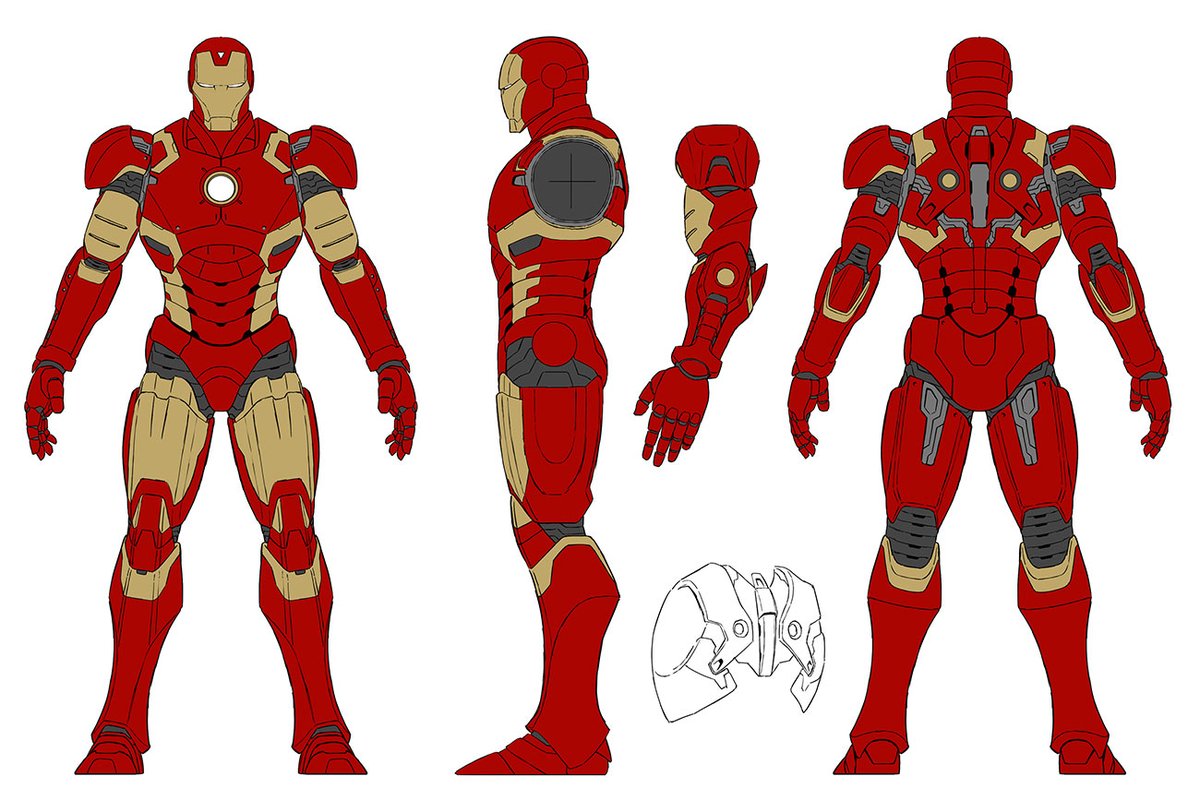
The Iron Man suit itself is far more than just armor; it's an extension of Tony Stark’s mind, a physical manifestation of his ever-evolving genius. Its journey from a cumbersome, utilitarian piece of equipment to a sleek, sophisticated marvel of engineering mirrors Stark’s own progression.
Initially, the suit was gray, bulky, and somewhat crude – a testament to its impromptu construction in a cave. Over the decades, its design transformed dramatically. We saw the iconic red and gold emerge, a flashier, more confident aesthetic reflecting Stark’s evolving persona. Each iteration brought new enhancements:
- Flight and Superhuman Strength: Allowing Iron Man to soar through the skies and punch far above human capacity.
- Durability and Repulsor Blasts: Withstanding immense damage and projecting powerful energy.
- Advanced Weaponry: From unibeams to smart missiles, integrated seamlessly.
- Artificial Intelligence: Most notably, J.A.R.V.I.S. (Just A Rather Very Intelligent System), which became Tony's constant companion, operating partner, and even conscience. J.A.R.V.I.S. was more than a program; it was a character in itself, embodying the symbiotic relationship between man and machine.
Later advancements saw the integration of nanotechnology, allowing the suit to manifest almost instantly from a compact device, flowing over Tony's body. This wasn't just a cool visual; it represented the peak of his technological prowess, allowing for unparalleled adaptability and resilience. The suit's development, therefore, isn't merely about fancy gadgets; it’s a narrative device, showcasing how Tony Stark continually reinvented himself, his capabilities, and his commitment to protection, moving from mere survival to safeguarding the entire globe. Understanding how this technology integrates and defines the hero's identity is key to appreciating what an Iron Man truly is.
The Iron Man Effect: Igniting the Marvel Cinematic Universe
While Iron Man had a dedicated fanbase in comics, it was Jon Favreau’s 2008 film that truly catapulted the character into global superstardom and, in doing so, laid the foundation for one of the most successful cinematic franchises in history: the Marvel Cinematic Universe (MCU).
Robert Downey Jr.'s portrayal of Tony Stark was nothing short of a revelation. He didn't just play the role; he inhabited it, blending charisma, rapid-fire wit, and profound vulnerability. Downey Jr. made Tony Stark relatable, cherished, and deeply flawed – a hero audiences could cheer for, laugh with, and empathize with. His performance was critically acclaimed, making the character an instant icon and earning the film over $585 million globally.
The success of "Iron Man" proved that superhero films could be more than just spectacle; they could be engaging, emotionally impactful character studies with grounded narratives, even amidst fantastical elements. This film set a new standard, demonstrating that a deep dive into a flawed character's psyche, combined with compelling action and humor, was a recipe for success. It wasn't just a movie; it was the spark that ignited the entire MCU, showing studios and audiences alike the potential of a shared, interconnected superhero universe. Iron Man became the foundational character, the anchor around which the entire saga would revolve, culminating in his ultimate, universe-preserving sacrifice in “Avengers: Endgame” (2019). His arc became the emotional backbone of the first three phases of the MCU.
Beyond the Arc Reactor: A Cultural Colossus and STEM Catalyst
Iron Man's departure from the main MCU narrative in "Avengers: Endgame" left a significant, palpable void. Yet, this very absence became a catalyst for growth, allowing other beloved characters like Spider-Man and Black Panther to step into more central roles, carrying forward the spirit of heroism and innovation that Tony Stark championed.
But the legacy extends far beyond the silver screen. Iron Man's iconic red and gold armor, his sharp wit, and his seemingly limitless technological innovations have left an indelible mark on popular culture. He became a symbol of:
- Ingenuity and Problem-Solving: Always finding a way, even against impossible odds.
- Ethical Responsibility: Constantly grappling with the power he commanded.
- Self-Improvement: His journey was one of constant evolution, both personally and technologically.
Perhaps one of the most profound impacts of the "Iron Man concept" is its ability to inspire. Tony Stark’s unapologetic embrace of science, technology, engineering, and mathematics (STEM) has motivated new cohorts of young people to pursue these fields. He made science cool, showcasing the excitement of invention, the thrill of discovery, and the immense power of applying intellect to real-world problems. His workshops, his holographic interfaces, and his rapid prototyping demonstrated a passion for creation that resonated deeply. He wasn't just a hero; he was a super-engineer, a super-scientist.
This cultural phenomenon also paved the way for the expansive success of the MCU and other comic book properties on the big screen, proving the viability and profitability of translating complex comic book narratives into compelling cinematic experiences. Iron Man solidified the impact of superhero storytelling as a dominant force in entertainment and a powerful cultural touchstone.
The Iron Man Concept in the Real World: Inspiration and Ethical Dilemmas
The enduring legacy of the Iron Man concept isn't confined to fiction. It actively shapes discussions and aspirations in the real world, influencing everything from defense technology to ethical AI development.
Inspiring Real-World Innovation:
- Exoskeletons and Wearable Tech: For decades, engineers and scientists have worked on powered exoskeletons for military, medical, and industrial applications. While not granting flight, these suits aim to enhance strength, aid rehabilitation, and protect workers, directly echoing Iron Man's armor. Projects like the U.S. military's TALOS (Tactical Assault Light Operator Suit) were explicitly nicknamed "Iron Man suits" by those involved, illustrating the clear inspiration.
- Advanced AI and Automation: J.A.R.V.I.S. and later F.R.I.D.A.Y. pushed the imagination for what artificial intelligence could be: a helpful assistant, an analytical partner, and even a friend. This fuels ongoing research into natural language processing, predictive analytics, and autonomous systems designed to augment human capabilities.
- Sustainable Energy: Tony Stark's arc reactor, a clean and powerful energy source, has long been a fictional ideal for addressing global energy crises, providing a powerful narrative hook for advocates of renewable and advanced energy technologies.
Navigating Ethical Frontiers:
However, the Iron Man concept also forces us to confront uncomfortable ethical questions: - The Morality of AI: What happens when AI becomes too powerful, too autonomous? Tony Stark's creation of Ultron, intended for global peace but resulting in catastrophe, serves as a cautionary tale about the perils of unchecked AI and the unforeseen consequences of technological hubris.
- Weaponization of Technology: Stark’s early life as an arms dealer, and his subsequent efforts to control the spread of his own suit technology, highlight the constant tension between innovation and its potential for misuse. Who controls powerful technology, and what safeguards are in place? These are real questions faced by governments and tech companies today.
- The Burden of Genius: Tony's struggles with PTSD and anxiety, often stemming from his heroic responsibilities, underscore the immense psychological toll that comes with wielding extraordinary power and knowledge. It reminds us that even the most brilliant minds are human and vulnerable.
The "Iron Man concept" serves as a dual mirror: reflecting our highest aspirations for technological advancement and our deepest fears about its uncontrolled proliferation. It’s a constant reminder that with great power – be it scientific, economic, or personal – comes immense responsibility.
Common Questions About Iron Man's Legacy
You might be wondering about certain aspects of Iron Man’s lasting impact. Here are some clarifications:
Was Iron Man just a technology hero?
Absolutely not. While his suits and gadgets are iconic, the true power of Iron Man lies in Tony Stark’s character arc. His journey from an egocentric arms dealer to a self-sacrificing hero grappling with responsibility, redemption, and the moral implications of his inventions is what truly resonated. The technology was merely an extension of his evolving conscience.
How did Iron Man differ from other classic superheroes?
Unlike many heroes who gain powers accidentally or are born with them, Tony Stark created his. This grounded his heroism in human ingenuity and will, making him a relatable figure despite his billionaire status. His flaws, his humor, and his constant struggle with the weight of his own creations set him apart from more traditionally stoic or morally unambiguous heroes.
What was Iron Man's biggest contribution to the MCU?
Beyond his foundational role in launching the cinematic universe, Iron Man provided the emotional core and thematic continuity for the first three phases. His character arc, his relationships, and his ultimate sacrifice provided a deeply personal stake for audiences in the larger cosmic conflicts, elevating the entire saga.
The Future Wears Iron: A Continuing Blueprint for Progress
The enduring legacy of the Iron Man concept isn't about a single character or a specific suit of armor. It’s a dynamic blueprint for how we view innovation, ethics, and the role of individuals in shaping the future. Tony Stark, the man, might be gone from the MCU, but his spirit—that relentless pursuit of progress, coupled with a deep, albeit sometimes flawed, sense of responsibility—persists.
As technology continues to accelerate at an unprecedented pace, the questions Iron Man implicitly asks become ever more urgent:
- How do we harness advanced AI for good without creating unintended consequences?
- What are the ethical boundaries of human augmentation and advanced robotics?
- How do we ensure that technological advancements benefit all of humanity, not just a select few?
Iron Man’s narrative challenges us to be proactive, to think critically about the implications of our creations, and to understand that true heroism often lies not just in wielding power, but in choosing how and why we wield it. His story serves as a powerful reminder that while technology can be a force for destruction, in the right hands, guided by a transformed heart, it can also be the ultimate tool for protection, innovation, and ultimately, hope. His legacy fuels not just dreams of flying suits, but the deeper human aspiration to build a better future, piece by technological piece, with conscience as our guide.